
Dry Needling
Renegade Movement & Performance provides dry needling in Bedford NH.
Dry Needling for Pain Relief and Recovery
Dry needling is integrated into physical therapy and bodywork sessions.
It’s a safe and effective technique used to decrease pain, improve mobility, and support recovery—especially for active adults.
What Dry Needling Can Help With
Dry needling is not required for care, but may be recommended when it supports your goals.
Persistent muscle tension and trigger points
Joint and muscular pain
Headaches and jaw pain
Post-training recovery
Improved circulation and reduced inflammation

Targeted Muscle Relief
Dry needling is one of many tools we use to support your recovery and performance. It reduces muscle tension and improves how your body moves.
We use dry needling intentionally when it supports your goals. Don’t like needles? That’s ok too, it’s YOUR body and YOUR care.
Frequently Asked Questions
Does dry needling hurt?
For most people, the short answer is no. If you do feel something during the treatment, the most common experience is described as “a pressure” or “an ache”, “a buzz/tingle”, and every once in a while, a tight muscle will gently twitch before relaxing. Most of these are not painful, but rather something that you can feel and is often an indicator of the treatment being effective. For folks who do not feel anything during treatment, the treatment is just as effective. You do not need to “feel something” during treatment to get results.
Is dry needling safe?
Yes! Dry needling is a very safe treatment— your provider has both extensive knowledge of anatomy and training on the dry needling procedure to ensure safety.
How quick can you see results from dry needling?
You can see results right away. Many patients will see and feel a rapid response and benefit within the same treatment day. For some, there is more benefit over the course of multiple treatment sessions. Your PT will be able to help you determine what you need after your initial evaluation.
What does dry needling do? What's the point of treatment?
Dry needling improves tissue mobility and circulation and helps with decreasing inflammation and pain.
How big are the needles?
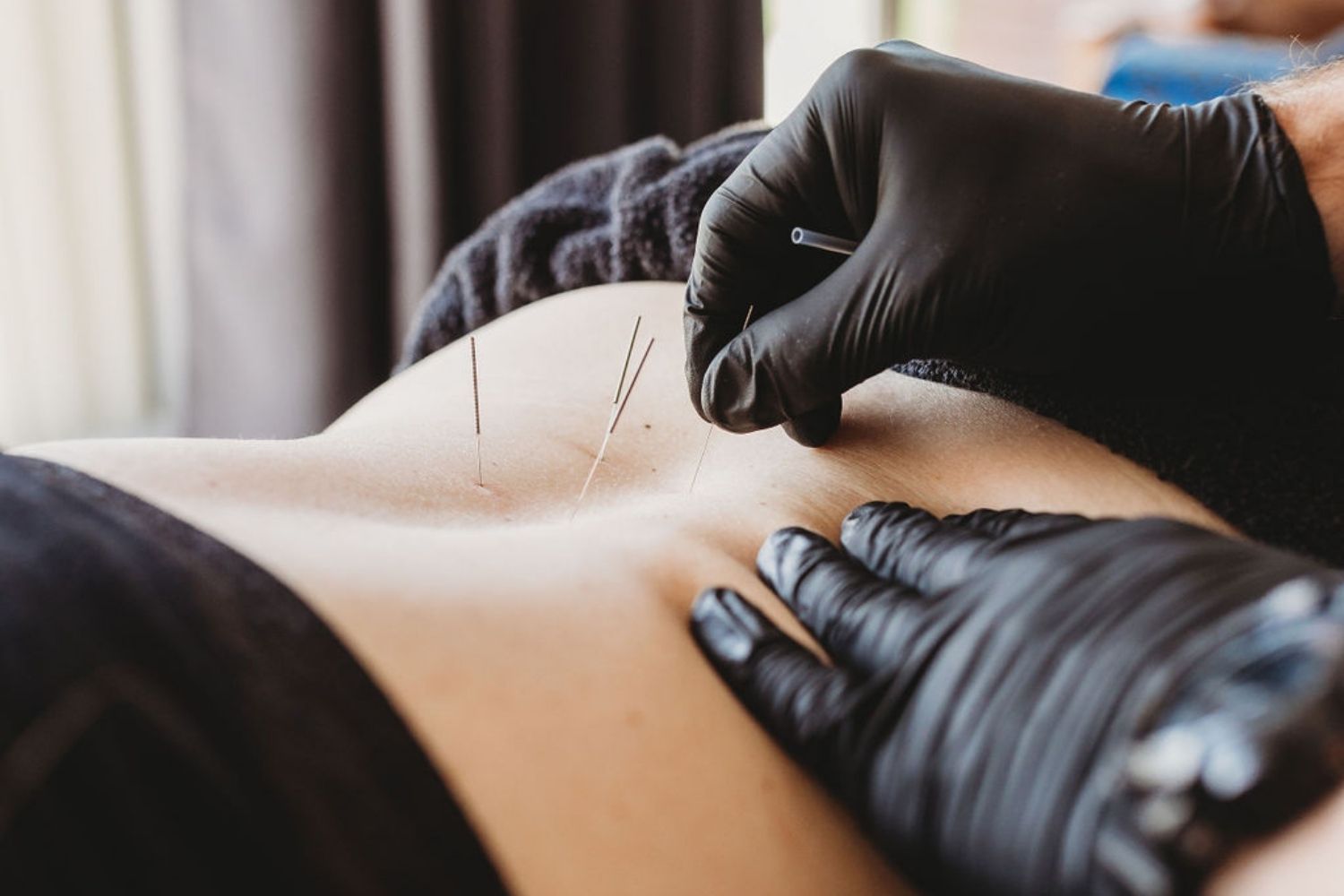
The needle size may vary depending on the treatment area and your comfort. All of the needles are very thin and filament-like. These needles are very similar to acupuncture needles if you are similar to that treatment.
Where do the needles go?
The needles are placed in the skin and sometimes into the muscles themselves.
How many needles are used?
It depends on the treatment area and your response. As few as one needle can be used, but you can also use several dozens at the same time. Typically 10-30 needles are used at the same time during treatment.
Are these needles the same as the ones I get blood drawn with?
No! Not even close. These needles are MUCH smaller, don’t have a hollow center, and do not have a sharpened cutting tip like those that are used for blood draws. Because of this, they are much more comfortable. You can fit LOTS of dry-needling needles inside of a blood draw needle. That’s how small they are!
Why is it called "dry" needling?
Unlike traditional needles where a substance moves through the needle (injected or withdrawn), nothing is injected or removed with these needles, which makes them “dry”.
Do you inject a medication with the needles?
No, nothing is ever injected and there is no medication on the needle itself.
Is dry needling required?
Absolutely not. It may be indicated for some and not for others. If it is indicated for your injury or treatment, you can always request a different modality instead of dry needling. It is never required.
How does dry needling fit into my treatment?
Some patients come in for dry needling treatment to support their recovery from high-level performance activities like CrossFit, cycling, running, fitness training, etc., and to promote whole-body relaxation and stress reduction.
Dry needling is very beneficial when it is integrated with movement-based treatment.
Can anyone get dry-needled?
Most people can be dry needled. We do screen for particular conditions that may limit the use of dry needling and if you have a question about a specific diagnosis that you have, please send us an email.
Can I get dry needling if I am pregnant?
Yes. Pregnancy is taken into consideration during treatment and we will limit the use of needles in certain areas for safety, but if you are pregnant, you can be dry needled. It is especially useful for SI Joint pain, tight and painful hips, headaches, and back pain during pregnancy.
Can dry needling be use for new injuries, such as an ankle sprain?
Absolutely. Often times it will speed up recovery time, decrease inflammation, and will improve your recovery and outcome of the injury overall.
Will I be alone during treatment?
No, your provider is with you the entire time. You are never left alone while the needles “do their job”. Your response and comfort are continuously monitored during the entire treatment.
Ready To Get Started?
Take the first step toward moving better, feeling stronger, and getting back to the activities you love.